
Drywall & Carpentry Repairs in San Antonio, TX
The repair work that has to happen before paint: drywall, texture matching, trim, and damaged fascia, soffit, and siding. Meticulous prep on every surface, and a final walkthrough with Carlos before we call it done.
Drywall & Carpentry Repairs in San Antonio, TX
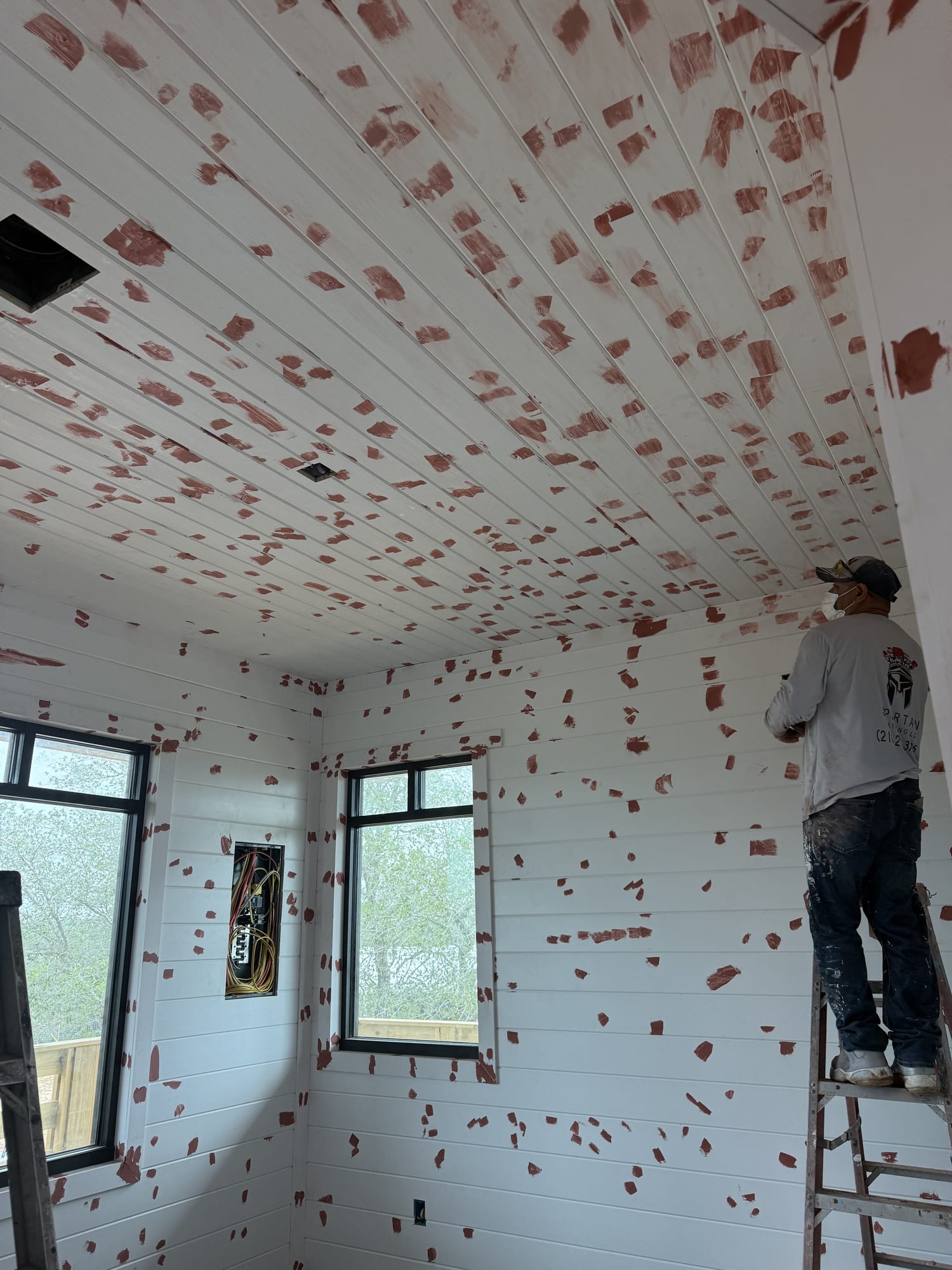
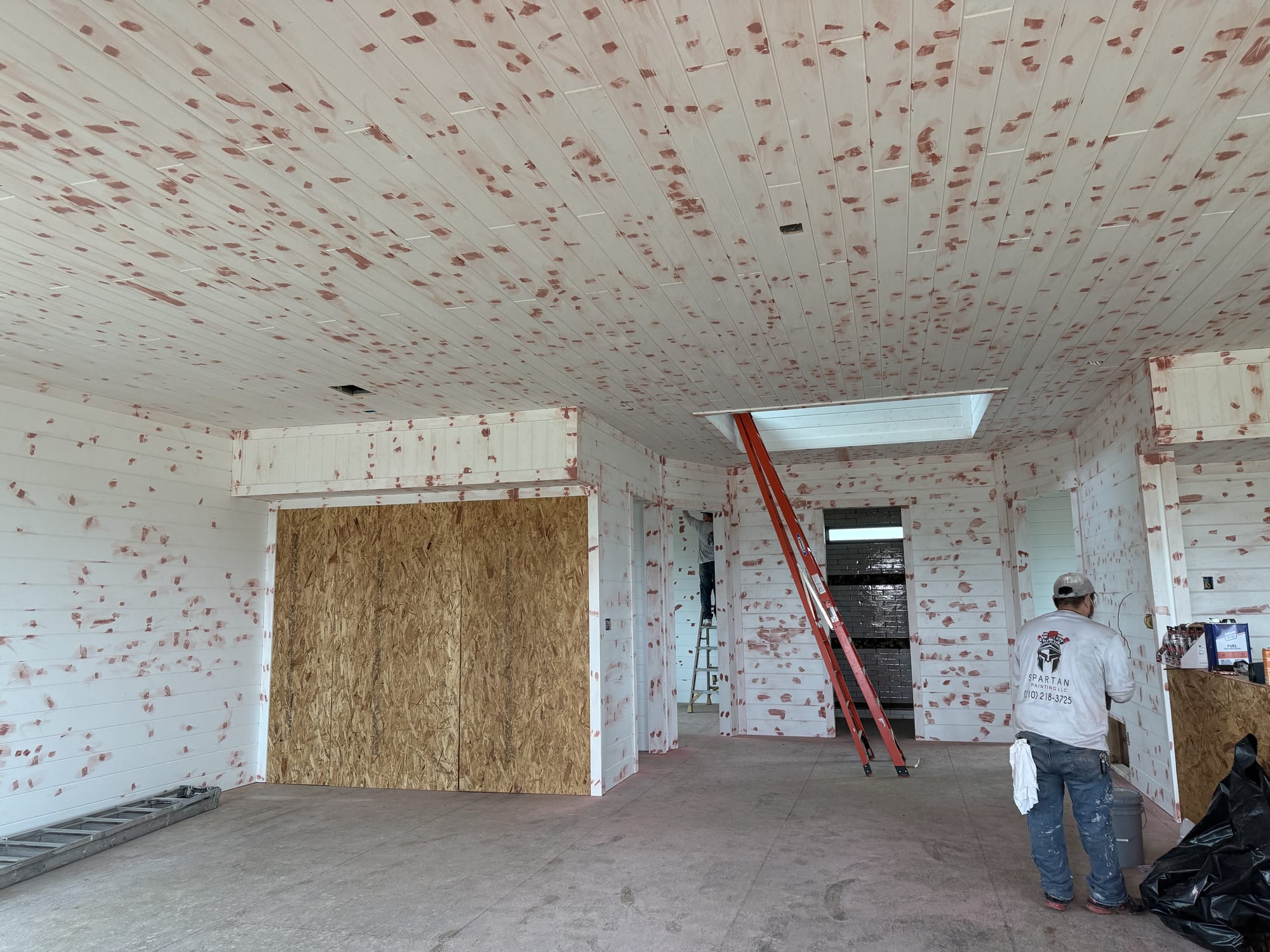
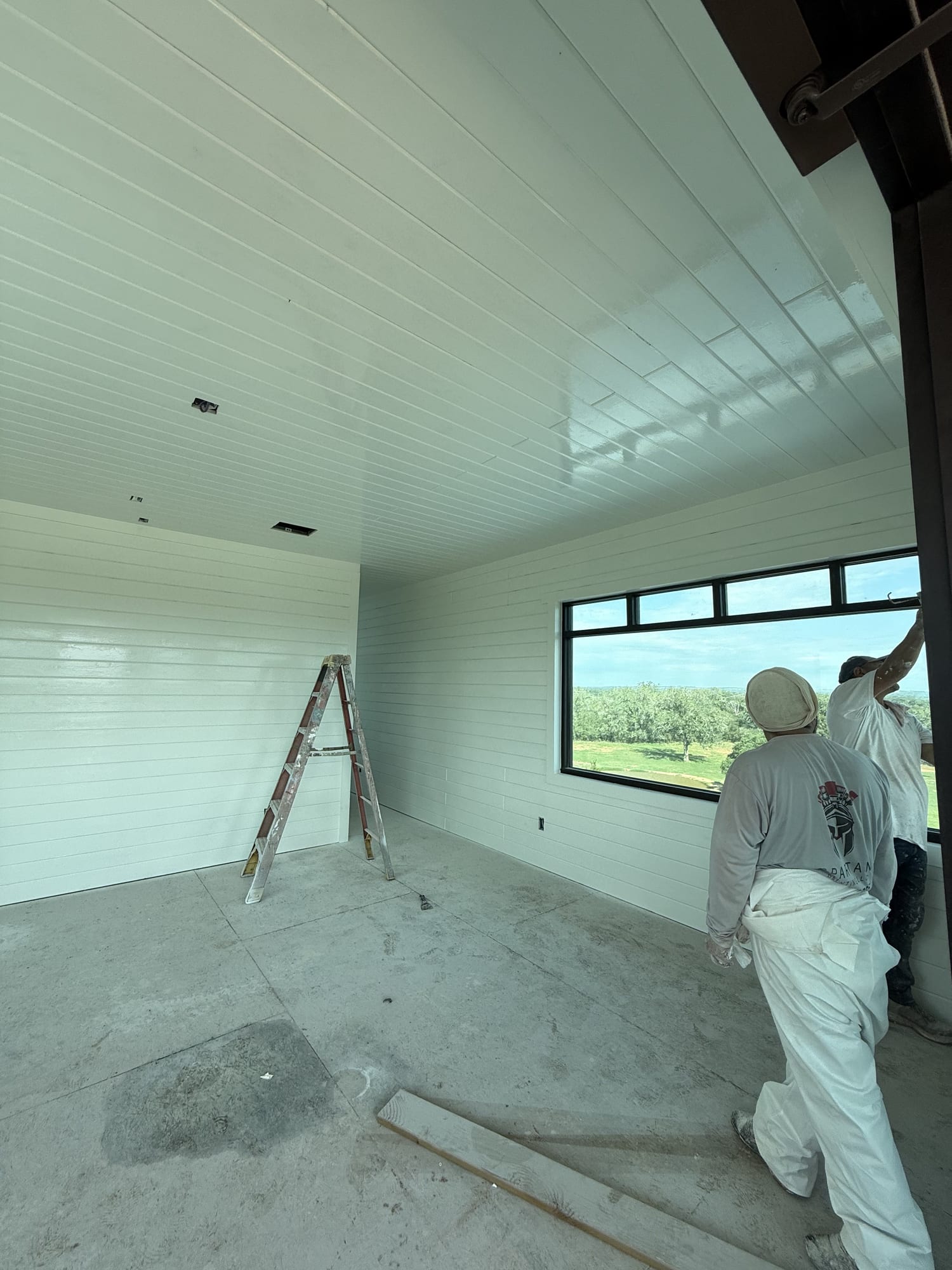
Paint does not fix damage, it highlights it. Spartan Painting handles the drywall and carpentry that has to come first: cracked corners, water-stained ceilings, holes, failed texture, damaged baseboard, casing, and doors, and weathered exterior fascia, soffit, siding, and trim. Keeping it in-house means one crew is accountable for the whole result, instead of a painter blaming a carpenter while you coordinate both of them.
Homes across San Antonio, TX sit on expansive clay that swells and shrinks with the seasons, and that movement shows up in predictable places: hairline cracks running diagonally from door and window corners, nail pops down long wall runs, and separation where drywall meets trim. Filling those with caulk hides them for a season. We tape, float, and feather repairs properly, then match the surrounding texture so the patch disappears rather than announcing itself under the new paint. Outside, we repair or replace rotted fascia, soffit boards, damaged siding, and trim before painting rather than sealing the problem in.
Need Drywall & Carpentry Repairs?
Get in touch with Carlos and the Spartan Painting team today. We provide upfront, written estimates for all drywall & carpentry repairs projects in San Antonio and surrounding communities.
Specific Drywall & Carpentry Repairs We Offer
We work across a wide range of surfaces, materials, and coating systems.
Drywall Patching & Holes
From nail holes to full sheet replacement, taped and floated properly.
Crack Repair
Taping and floating settlement cracks so they do not reopen through the paint.
Texture Matching
Blending knockdown, orange peel, and hand textures so repairs disappear.
Water Damage Repair
Replacing damaged board and stain-blocking before finishing.
Interior Trim, Doors & Millwork
Repairing and replacing baseboards, casing, doors, and damaged millwork.
Fascia, Soffit, Siding & Trim
Repair or replacement of weathered exterior wood ahead of painting, from single boards to full runs.
Reasons to Look at Drywall & Carpentry Repairs
Diagonal cracks running off door and window corners come from soil movement, not bad drywall. They need tape bedded in compound and floated wide. Filler squeezed into the gap reopens on the same line and telegraphs through the fresh paint.
Popped fasteners and visible seam lines show up as framing dries and moves. Screwing the panel back tight above and below the pop, then patching and re-texturing, keeps it down instead of hiding it for a season.
Once the leak is resolved, the stain still needs a stain-blocking primer or it bleeds through new paint. Damaged board gets cut out and replaced rather than coated over.
Soft fascia, sagging soffit panels, siding that has swollen or split along the bottom edge, and rotted window casing will not hold paint no matter how good the coating is. Repairing or replacing that wood first is what makes an exterior repaint last.
Containment and Repair Sequence, Inside and Out
Most of what decides how the work holds up happens before the first coat goes on.
Dust stays contained
Sanding drywall makes fine dust that travels through a whole house. We seal the work area with plastic sheeting, cover the floor with canvas, and tape off returns and vents so the HVAC system does not carry it into other rooms. Furniture that cannot move out gets bagged.
Repairs before paint
Every patch gets finished before a drop of finish coat goes on. Compound goes on in thin passes and gets feathered several inches past the damage, then we match the existing texture, whether that is orange peel, knockdown, or a hand trowel pattern. Primer follows, and the patch gets checked under a raking light before paint.
Interior trim and doors
Split baseboard, loose casing, and door jambs chewed up around a strike plate get repaired or replaced instead of filled over. Loose joints get refastened first, because filler over something that still moves cracks again in a season. Then it gets sanded, caulked at the wall line, and primed.
Exterior siding, trim, and doors
Fascia, soffit, siding, and exterior door jambs take the worst of the UV and the storms. Soft or swollen wood gets probed to find how far the damage actually runs, and anything past filler territory gets cut out and replaced. We prime the cut ends and the back side before the piece goes up, since that is where water gets in first.
How We Make Sure the Job Is Done Right
We guide every drywall & carpentry repairs project through a structured, multi-step quality checklist.
Find the Cause
We work out why the damage happened, whether it is movement, moisture, or impact, because a repair over an active leak fails no matter how well it is done.
Protect the Area
We contain dust and cover floors and furnishings before any cutting or sanding starts.
Repair the Substrate
We cut out damaged board, replace rotted wood, re-secure loose framing, then tape and float the repair.
Match the Texture
We match the existing texture and feather it into the surrounding surface so the patch is not visible under paint.
Prime & Paint
We prime repairs, spot-block any staining, and paint so the finished area blends with the rest of the surface.
What Neighbors Say About Our Drywall & Carpentry Repairs Services
Read real Google reviews from homeowners and businesses who trusted Spartan Painting for their drywall & carpentry repairs needs.
Drywall & Carpentry Repairs FAQs
A crack that reopens is usually movement, not a bad patch. The expansive clay soil across San Antonio, TX swells after rain and shrinks in the summer, the slab moves with it, and the framing follows. Fixing it for good means addressing the cause first, then repairing with tape bedded in compound instead of filler squeezed into the gap.
Fasteners back out when framing lumber dries and shrinks, which is common in the first couple of years of a new home. When pops show up in clusters along one wall or line up with cracks at door corners, that pattern points to slab movement instead. The repair is the same either way: screw the panel back tight above and below, then patch and texture.
Fresh compound is more porous than the surrounding paint, so an unprimed patch flashes and reads as a dull spot even in the correct color. We prime the repair, and for anything larger than a small ding we recommend painting corner to corner so the sheen stays uniform. Spot painting only disappears on flat paint in low light.
Water-damaged or rotted framing, trim, door casing, and baseboard often come with the drywall problem, and we do carpentry as well as drywall. Patching over wet or damaged wood traps the issue and the repair fails again. Fixing the source and the substrate first is what makes a patch permanent.
Number of repairs, size and depth of each, ceiling versus wall access, texture type, and whether framing or insulation behind the panel needs work. Ten small patches in one room cost less per patch than one patch in ten rooms because of setup and travel. Estimates are free and itemized after a walkthrough.
Texture matching is the difference between a repair you notice and one you do not. Orange peel, knockdown, and hand-troweled patterns each need a different tool and a different mud consistency, and the blend has to feather well past the patch so raking light does not reveal a rectangle. We test on a scrap board before touching the wall.
Spackle handles nail holes and shallow dings and nothing more. Anything that goes through the panel, any seam, and any crack needs backing, paper or mesh tape bedded in joint compound, and two or three coats feathered wide. Filler pushed into a crack without tape will crack again on the same line.
Most repairs span two days or more because compound has to dry between coats, roughly 24 hours per coat depending on humidity and how thick it went on. A small patch with texture and paint can finish in a day. Larger repairs, water damage, or a wall needing several coats stretch further.
We repair and replace exterior wood as part of the same scope. Fascia and soffit boards rot where gutters overflow or flashing fails, and hardboard or fiber cement siding usually goes first along the bottom edges and around nail heads, where water wicks in and the board swells or splits. Sections past saving get cut out and replaced, cut edges get sealed, and everything gets primed before the elevation is painted, so the repair disappears into the finish coat.
Ready for a Fresh Look in San Antonio, TX?
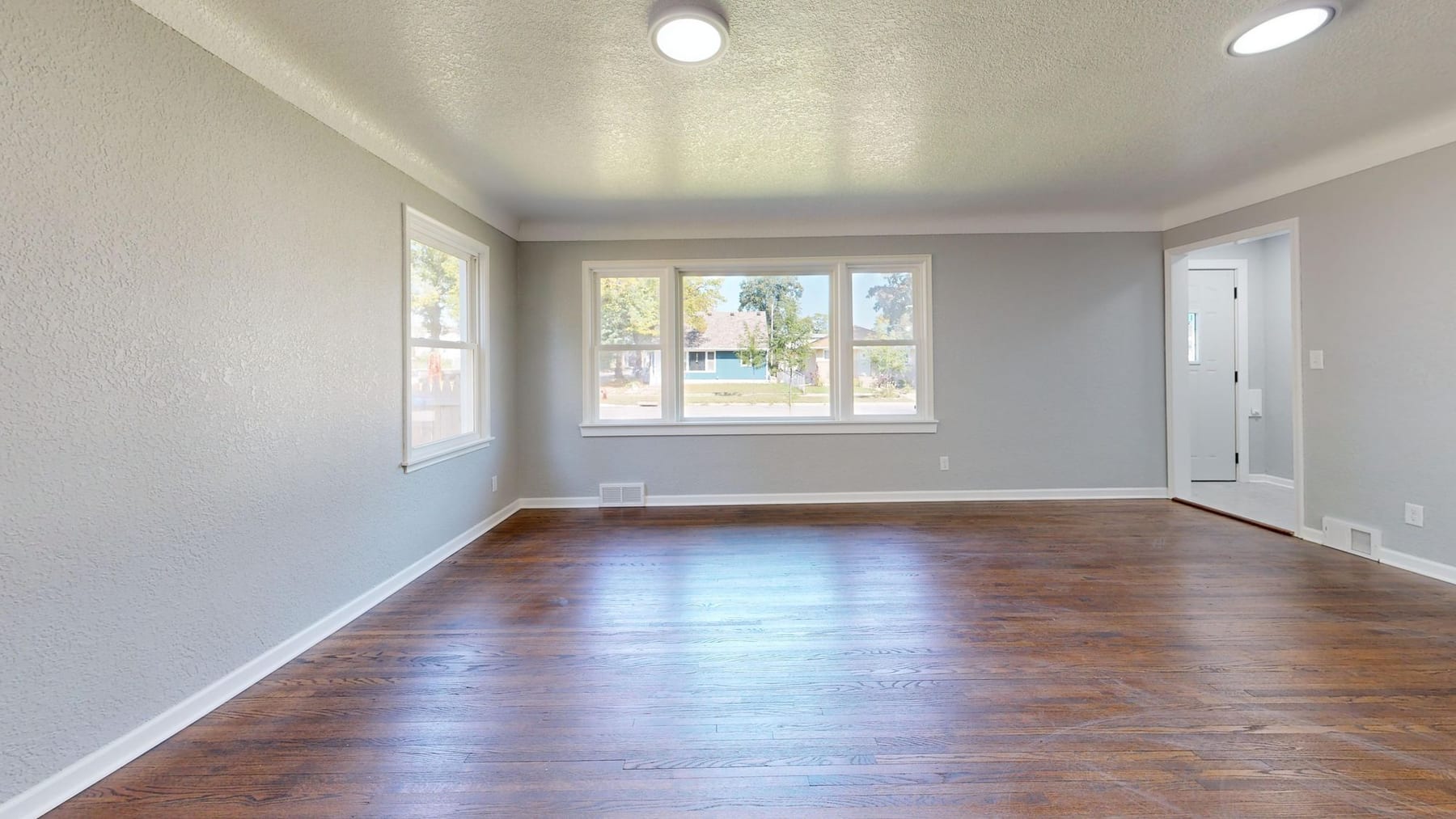
Join the local homeowners and business owners who call Spartan Painting for straightforward pricing, careful preparation, and the kind of finish they end up recommending to a neighbor.
No Obligation · Locally Owned & Operated · 3-Year Warranty on Interior & Exterior Projects