
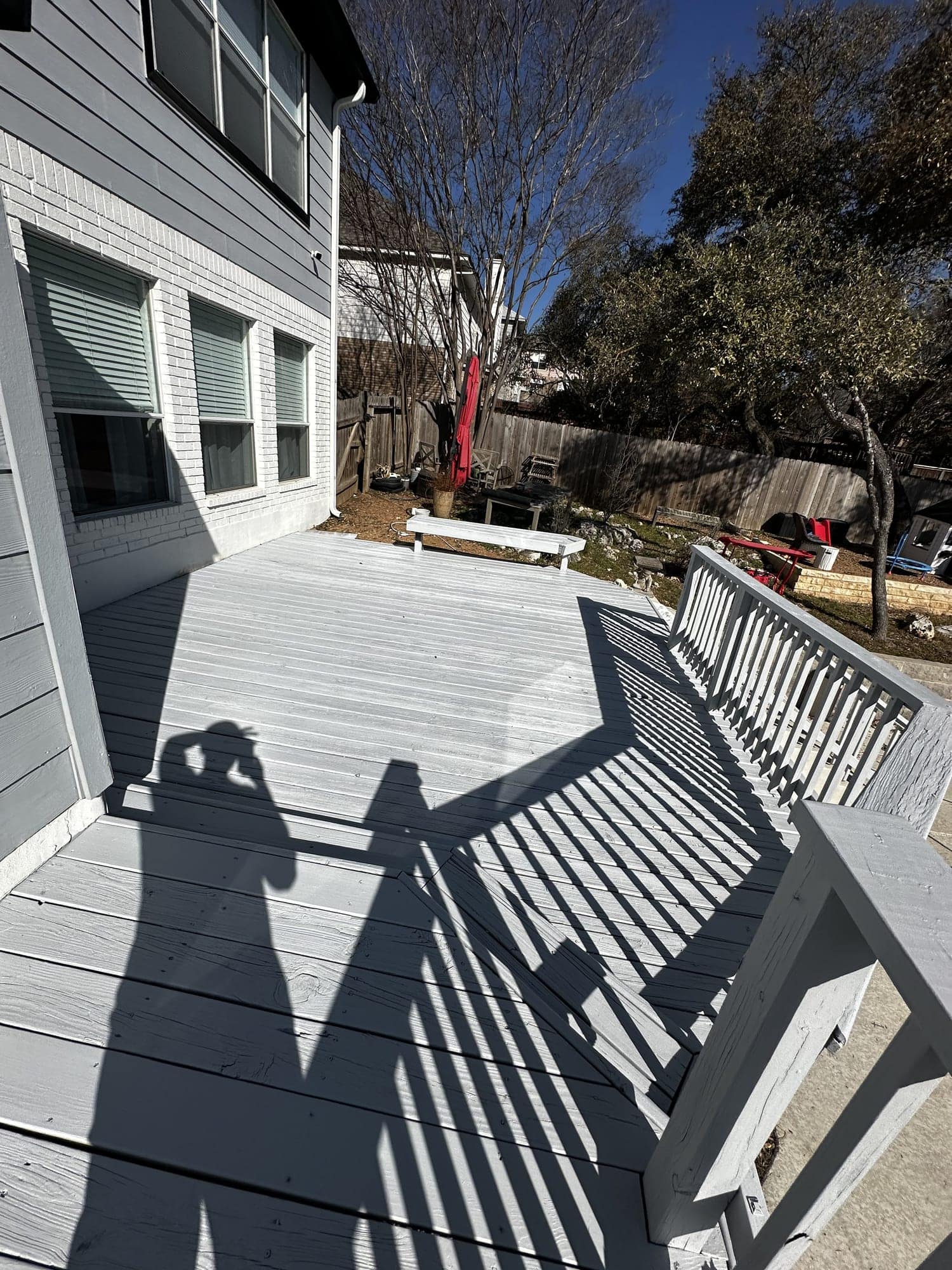
Deck & Fence Staining in San Antonio, TX
Cleaning, brightening, and sealing outdoor wood that takes the full force of Texas sun. Backed by our 3-Year Warranty on Interior & Exterior Projects.
Professional Deck & Fence Staining in San Antonio, TX
Outdoor wood in San Antonio, TX ages faster than anything else on a property. Direct sun breaks down the surface fibers until boards turn gray and splinter, then heavy seasonal rain soaks into wood that no longer repels it. Spartan Painting restores decks, privacy fences, pergolas, and gates, cleaning and brightening the wood back to a usable surface before sealing it against the next few summers.
Stain cannot fix wood it never reaches. We clean the surface to strip dirt, mildew, and the dead gray fiber layer, apply a brightener to bring the natural tone back, and sand the rough or splintered boards. Failed boards and loose fasteners get fixed before finishing instead of sealed in. The penetrating stain and sealer goes on after that, in whatever transparency you picked (transparent, semi-transparent, or solid), brushed and back-brushed so it works into the wood rather than sitting on top of it. That last part is usually the difference between a stain that lasts two seasons and one that lasts five.
Need Deck & Fence Staining?
Get in touch with Carlos and the Spartan Painting team today. We provide upfront, written estimates for all deck & fence staining projects in San Antonio and surrounding communities.
Specific Deck & Fence Staining We Offer
We work across a wide range of surfaces, materials, and coating systems.
Deck Staining & Sealing
Decking, stairs, and railings cleaned, brightened, and sealed.
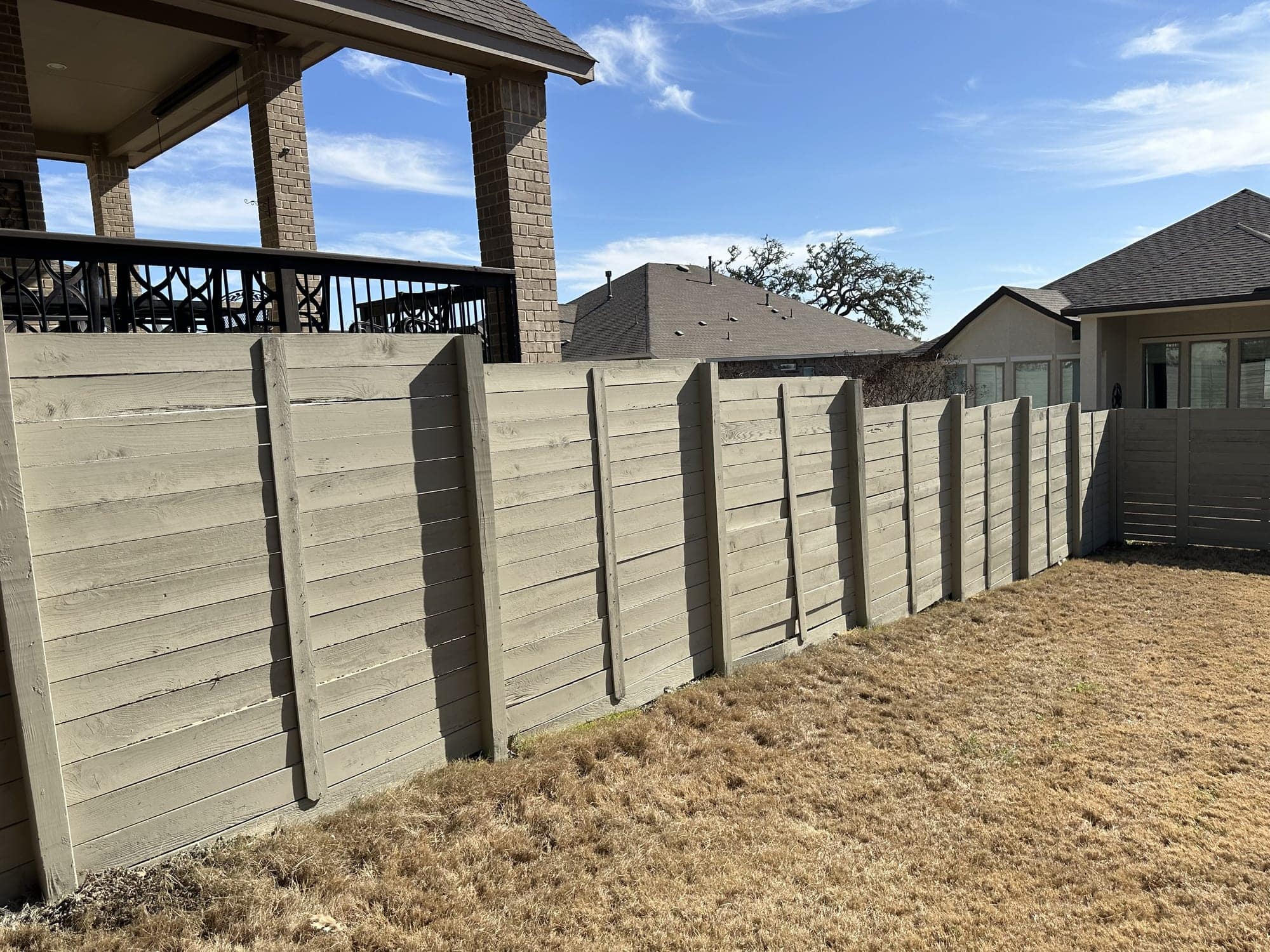
Privacy Fence Staining
Spray-and-back-brush application for even coverage across long runs.
Pergolas, Arbors & Gates
Detail finishing on outdoor structures and entry features.
Cleaning & Brightening
Removing gray fiber and mildew, then restoring natural wood tone.
Solid-Color Deck Coatings
Opaque finishes for older wood that no longer suits a transparent stain.
Board & Fastener Repair
Replacing cracked or rotted boards and re-securing loose railings.
Reasons to Look at Deck & Fence Staining
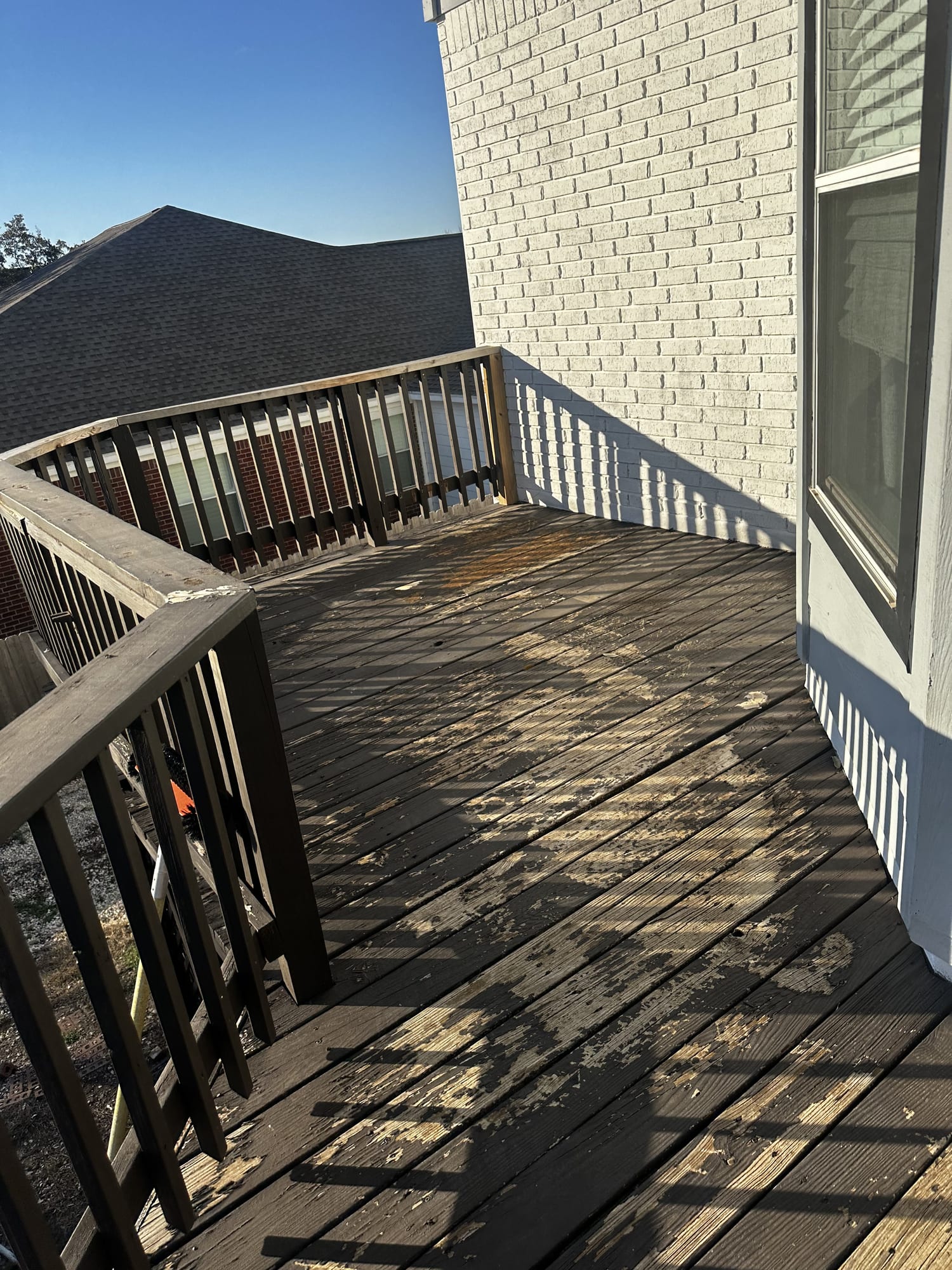
Graying means UV has already broken down the surface fibers. Cleaning and brightening reverses the color; sealing keeps it from returning as quickly.
If rain soaks straight in instead of beading, the sealer is gone and the wood is absorbing every storm. That is when warping, cupping, and rot begin.
Dry, sun-baked decking splinters along the grain and turns rough underfoot, which matters most on stairs, rails, and anywhere people go barefoot. Sanding knocks the raised fiber back down, and the sealer slows how fast the boards dry out again.
Privacy fences weather by exposure, so the sun-facing side goes gray while the shaded end still looks close to new. Staining brings the whole run back to one tone.
Cleaning Comes First, and Everything Around the Wood Stays Clean
Most of what decides how the work holds up happens before the first coat goes on.
Every job starts with a wash
Dirt, mildew, and the dead gray surface fiber have to come off before anything else happens, because stain bonds to wood, not to whatever is sitting on top of it. The wash runs at controlled pressure, enough to clean the boards without furring the grain or etching lines into the surface.
The house is masked off
Siding, stone, windows, and doors along the deck get sheeted and taped before any stain opens, and drop cloths cover the patio, walkways, and everything under the rails. Stain is unforgiving on surfaces it was never meant to touch, so the masking gets set wider than the work.
Plants and grass get covered
Beds and shrubs along a fence line get tarped before spraying starts, and long runs get worked with the wind rather than against it. The spraying itself moves fast. The protection that goes up first is what keeps the fast part from becoming a problem.
Dry wood, dry forecast
Stain goes onto dry wood or it does not go on at all. After the wash, the boards get a day or more to dry back out, and a moisture check settles the call rather than a guess. The forecast gets the same respect, because a coat that takes rain in its first day has to be redone.
How We Make Sure the Job Is Done Right
We guide every deck & fence staining project through a structured, multi-step quality checklist.
Assess the Wood
We check the wood's condition, prior coatings, and moisture so we recommend a stain system that will actually bond.
Clean & Brighten
We wash off dirt, mildew, and dead gray fiber, then apply a brightener to restore the natural tone.
Sand & Repair
We sand rough boards and railings and replace anything cracked, cupped, or rotted.
Apply Stain
We apply penetrating stain and sealer, back-brushing so it works into the wood rather than sitting on the surface.
Walk & Advise
We inspect the finished surface with you and explain exactly when it can take foot traffic and furniture again.
What Neighbors Say About Our Deck & Fence Staining Services
Read real Google reviews from homeowners and businesses who trusted Spartan Painting for their deck & fence staining needs.
Deck & Fence Staining FAQs
Plan on every two to three years here. The UV load and summer heat break stain down faster than the national two to five year guidance, and horizontal surfaces like deck boards and rail caps go first because they take direct sun all day. Fence runs facing south and west almost always gray out before the shaded sections do.
New pressure-treated lumber has to dry before it will accept stain. Depending on how wet the boards were at delivery, that can run from a few weeks to several months, and the target is roughly 15 percent moisture content or lower. A water test tells you a lot: if drops bead up instead of soaking in, the wood is not ready.
Stain penetrates the wood and wears thin as it ages, so recoating means cleaning and reapplying. Paint sits on the surface as a film, lasts longer while it stays intact, but fails by chipping and peeling and forces a full strip before you can recoat. Once a deck is painted, going back to stain means removing every trace of that film.
Application method matters as much as the product. Sprayed stain has to be back-brushed right away so it works into the grain instead of sitting on top, and boards get run end to end so there are no lap marks stopping mid-run. Thin coats also beat one heavy coat, which pools and stays tacky.
Pigment level is the tradeoff. Transparent shows the most grain but carries the least UV protection, semi-transparent adds color and holds up longer, and solid covers the grain entirely while giving the strongest UV and moisture defense. On weathered or previously coated wood, semi-transparent and solid are usually the realistic options.
Failing stain has to come off or the new coat sits on top of it and peels the same way. Depending on what is up there, that means pressure washing at controlled pressure, chemical stripping, sanding, or some combination. Skipping this step is the most common reason a stain job fails inside of a year.
Square or linear footage, the number of rails, balusters, and lattice sections, the condition of the existing finish, and whether stripping or sanding is required. A weathered fence that needs stripping takes far more labor than a two-year-old one that needs a wash and a coat. We walk it, measure it, and give you a free itemized estimate.
Dry to the touch comes first, a few hours for water-based and up to a day for oil-based, and the surface has to get there before weather hits. Full cure runs 24 to 72 hours, so hold off on furniture, planters, and grills until then. During storm season we watch the forecast and move a start date rather than gamble on a pop-up.
Ready for a Fresh Look in San Antonio, TX?
Join the local homeowners and business owners who call Spartan Painting for straightforward pricing, careful preparation, and the kind of finish they end up recommending to a neighbor.
No Obligation · Locally Owned & Operated · 3-Year Warranty on Interior & Exterior Projects